
IT Fabric · Protection & Recovery
Backup Monitoring and Recovery Readiness
See protection and restore evidence in the context of the service being protected, not simply the status of a backup job.
Know what is protected. Prove what is recoverable.
Capability area 1 of 2
Know what is protected. Prove what is recoverable.
Protect supported Microsoft 365 and Google Workspace data, monitor Veeam, capture device configurations, and see recovery readiness in the same operating context as the services being protected.
What improves
- Maintain independent protection for critical cloud data.
- Find protection gaps before they become recovery failures.
- Reduce portal switching by connecting backup status to operational impact.
Supported behavior
SaaS protection
Supported Exchange, OneDrive, SharePoint, Teams, Gmail, Drive, and Shared Drive protection, independent of the platform being protected.
Granular restore
Restore by supported workload, down to the item where the workload allows it.
Per-customer encryption and tenant isolation
Customer data stays cryptographically separated, with access scoped by tenant.
Veeam visibility
Job health, restore points, repositories, capacity, and immutability where supported, without changing backup engines.
Network configuration backup
Device configurations with change history, so a recovery includes the network state around the workload.
Operational context
A failed job or missing restore point connects to the service, user, site, and ticket it affects, instead of aging in another portal.
In practice
The job said success. The mailbox was not in it.
A tenant adds forty users over a quarter and the backup scope never catches up. Every job reports green. Ixvara Backup reconciles what exists against what is protected, so the gap shows up as an exception on Monday, not as a question from legal in six months.
Capability area 2 of 2
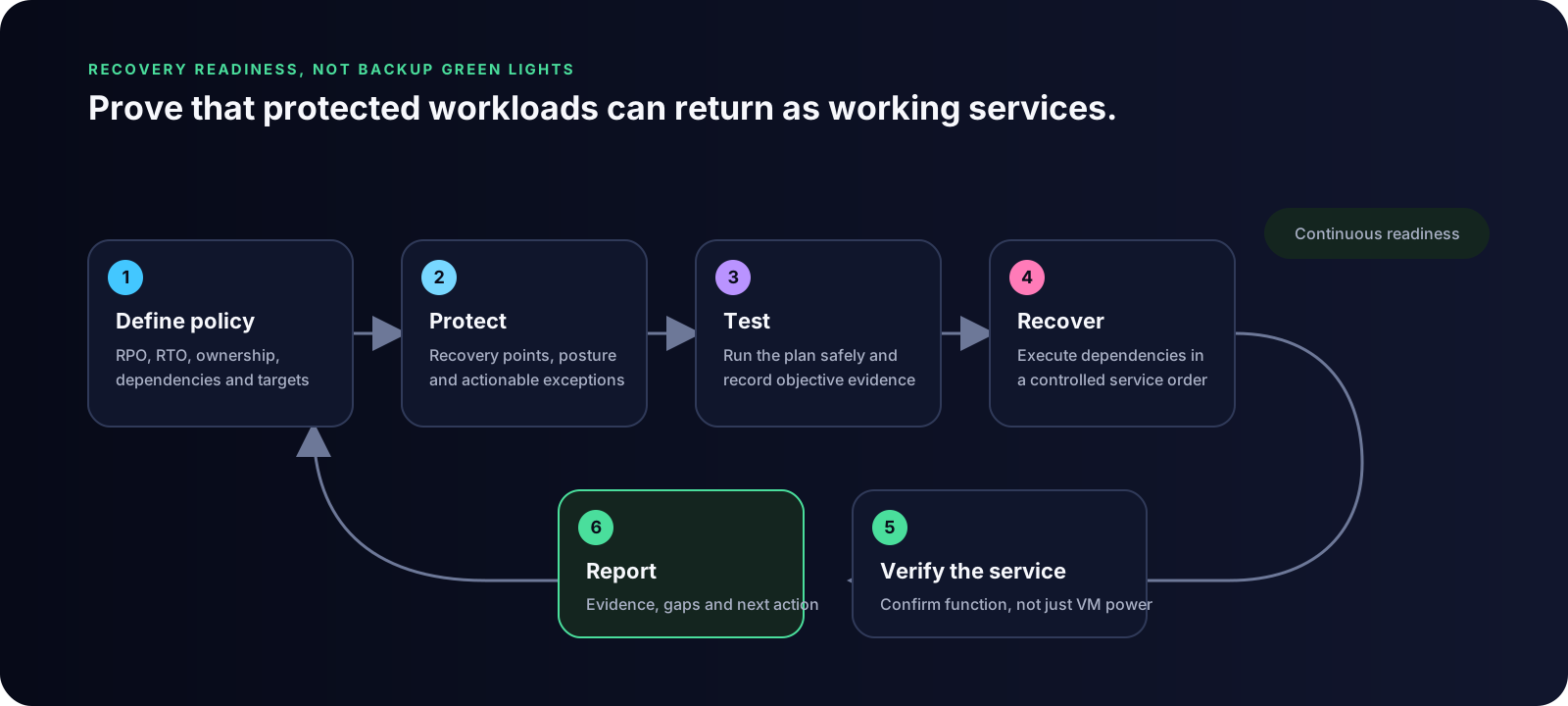
Recover the service. Not just the server.
Align infrastructure, data, network, identity, runbooks, ownership, and business priorities around the service that must return.
What improves
- Move from backup-job confidence to service-recovery confidence.
- Make recovery plans easier to test, review, and improve.
- Coordinate failover decisions with the dependencies and approvals involved.
Supported behavior
Dependency mapping
Service-to-VM, storage, network, identity, site, and data dependency mapping where configured, so the plan covers the whole service.
Recovery objectives and ownership
Service-level recovery objectives, sequences, owners, and evidence, reviewed against what protection can actually deliver.
Recovery testing
Test recovery and capture the result by supported scope, so confidence comes from runs, not documents.
Approval and audit for consequential action
Stronger authentication and explicit approval on recovery actions that change production.
Failover and failback workflow
Coordinated workflow by supported integration, covering the infrastructure, network, and identity steps together.
Outcome history
Every test and incident improves the plan, because what happened is preserved with what was decided.
In practice
The backup ran. Could you actually recover?
A copy existing is not a service coming back. Ixvara DR plans the whole service, the order it returns in, and the identity and network steps around it, and tests that plan by supported scope, so the first real failover is not the first time the plan has run.
Connected to the rest of the fabric
Protection & Recovery shares operating context, governance, and outcome history with every other IT Fabric domain. The evidence gathered here strengthens investigations everywhere else.
See this on a workflow that matters to you.
Tell us where the effort goes today. We will build the demonstration around that workflow.