How IT Fabric Works
How Ixvara IT Fabric Works
Ixvara gathers the relevant context, helps determine what should happen next, routes action through the right controls, and checks whether the result was achieved.
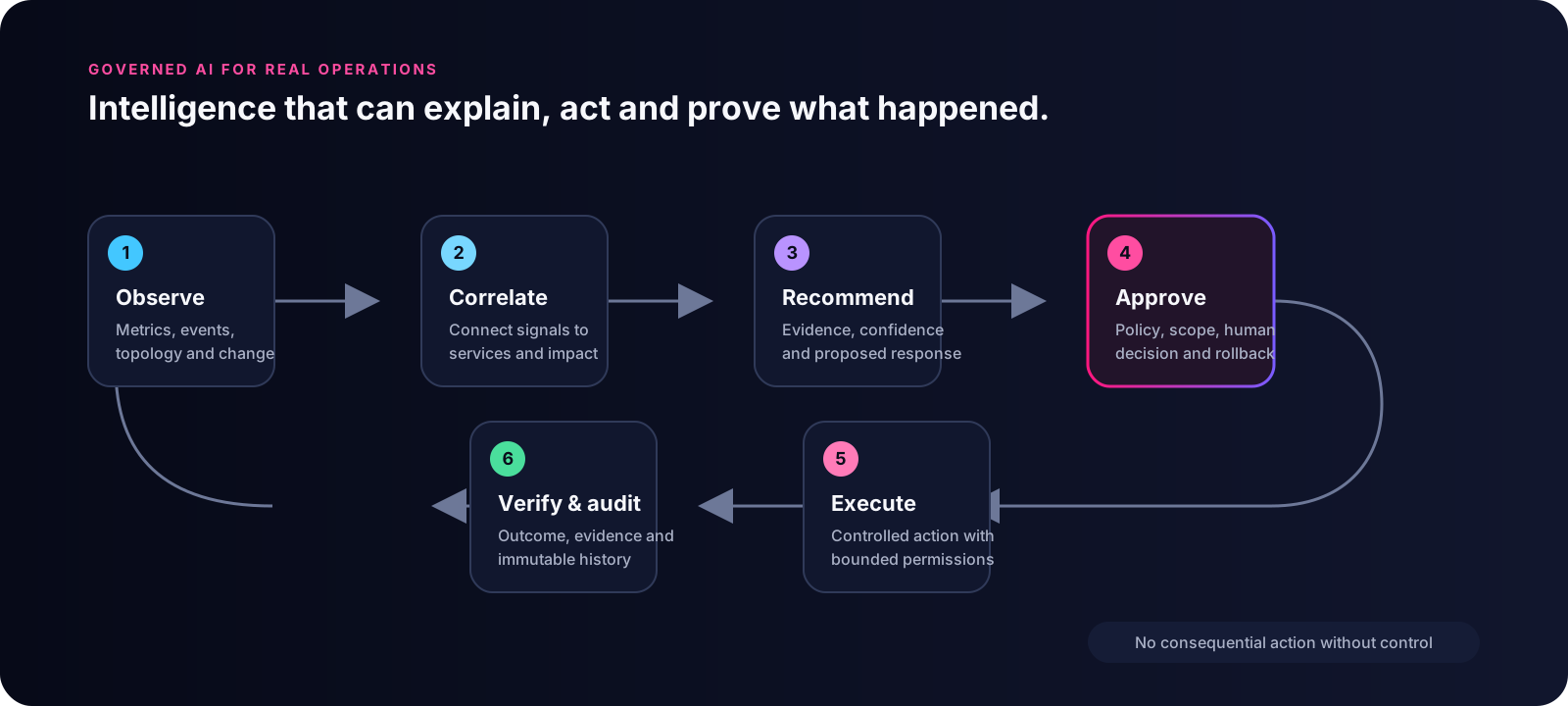
The Five-Stage Operating Loop
- 01
Understand
Gather the relevant evidence and relationships: users, services, systems, dependencies, alerts, tickets, changes, and recovery state.
- 02
Decide
Produce an evidence-backed explanation and recommended next action.
- 03
Govern
Apply tenant, identity, role, policy, risk, and approval requirements.
- 04
Act
Execute supported deterministic tools and workflows.
- 05
Verify and learn
Confirm the outcome and preserve what worked.
How IT Fabric Compares to Monitoring, AIOps and Automation Tools
Capabilities of typical copilots and automation tools are workflow-dependent; this table describes the common case, not every product.
| Capability | Copilot | Automation tool | Ixvara |
|---|---|---|---|
| Answer a question | Yes | Sometimes | Yes |
| Gather cross-stack evidence | Limited | Predefined | Across supported integrations |
| Understand service and relationship context | Limited | Limited | Yes, where supported |
| Recommend a next action | Sometimes | Predefined | Evidence-backed and policy-aware |
| Apply role, tenant, policy, and approval controls | Limited | Workflow-specific | Core operating layer |
| Execute a supported deterministic action | Usually no | Yes | Yes, within approved scope |
| Verify the operational outcome | Usually no | Workflow-specific | Core loop |
| Preserve reusable outcome history | Limited | Workflow logs | Yes, where supported |
Actions are scoped by tenant, identity, role, policy, and approval. Ixvara does not claim universal autonomy or universal write access.
See How Ixvara IT Fabric Handles an IT Issue
- 01A storage latency alert fires at the same time ticket volume rises for one office. Ixvara connects the alert, the tickets, the affected service, and a change made the night before.
- 02The evidence points to the change: a storage policy applied to the wrong volume. The recommended action is a scoped rollback, with the blast radius and rollback plan attached.
- 03Policy says storage changes need a senior approval. The right person gets the proposal with the evidence, not a phone call at 2 a.m. with no context.
- 04The approved rollback runs as a deterministic workflow, scoped to the one volume.
- 05Latency returns to baseline, the affected service checks healthy, the tickets resolve with the cause documented, and the pattern is kept for the next time a change and a symptom line up.
An illustrative walk-through of the operating loop, not a customer case study.
See IT Fabric With Your Environment
Tell us the problem that matters. We will build a focused demonstration around it.