
Selected Work · MSP Operational Modernization
MSP Operations Modernization with AI and Automation
We built IT Fabric because we were tired of paying people to connect the dots manually. The MSP is a separate operating company under the same ownership as Ixvara, which made it a demanding test bed: we live with every consequence of the design. It started as an operating problem, not a product plan.
The Operational Problem
The MSP operating model had a structural flaw we were living with every day: growth multiplied everything except capacity. More customers meant more tools, more alerts, more tickets, more exceptions, and more operational context that technicians had to hold in their heads.
The environment already had monitoring, service delivery, security, identity, cloud, backup, and infrastructure tools. The data existed. The cost was the time and expertise required to connect it around a customer, a service, a person, or an incident.
Existing Tooling and Technician Workflow
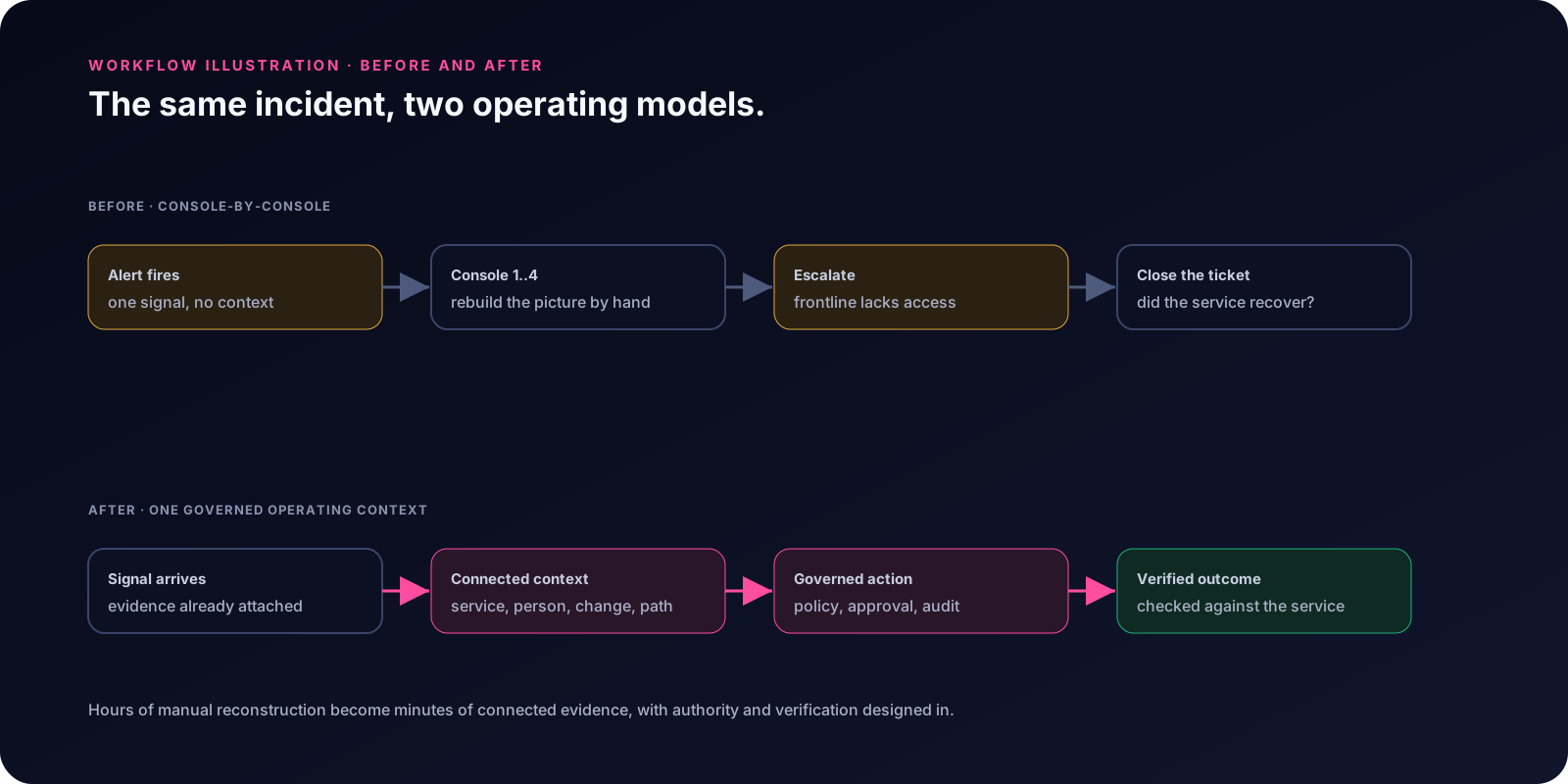
Alerts arrived without enough context to act on. Technicians rebuilt the same picture across multiple consoles for every investigation. False positives consumed attention. Work escalated not because it was hard, but because the evidence lived behind administrative access the frontline did not have, and should not have needed just to look.
What We Built
We started connecting the systems: PSA, monitoring, Microsoft 365, identity, endpoints, network, virtualization, and backup. Evidence gathering became automatic. Relationships between people, devices, services, and infrastructure became a shared operating context instead of tribal knowledge.
Then we turned repeatable work into controlled workflows: recommendations with the evidence attached, approvals where actions were consequential, deterministic execution, and verification that the problem actually went away.
What Became Ixvara IT Fabric
The connective layer was not specific to one MSP. The integration architecture, the shared context model, the governance path, and the verification discipline generalized. That platform IP became Ixvara IT Fabric, now deployed for enterprise IT and service providers.
Results
Roughly $60,000 per year in costs removed
Reduced overlapping operating and tool costs in one early deployment.
Triage evidence gathered in minutes instead of hours
Connected evidence reached the technician before another manual console-by-console investigation.
A Microsoft 365 compromise surfaced within minutes
Identity and cloud evidence became an actionable investigation shortly after deployment.
Network problems identified before users complained
Recurring infrastructure conditions became visible before they turned into another user-reported incident thread.
Results from one deployment: an MSP that is a separate operating company under the same ownership as Ixvara. Outcomes vary by environment, configuration, and approved scope.
Lessons
The bottleneck in IT operations is rarely a missing tool. It is the unpaid, unmeasured work of assembling the situation from the tools already owned. Fix that, and escalation ladders shorten, frontline capability grows, and the operating cost curve bends without the quality of service falling.
The second lesson shaped the product: automation that people trust is governed automation. Every consequential action keeping its evidence, approver, and verification is what made the team comfortable letting software do more.
Related Ixvara Services
Discuss a Similar Project
Bring it to a 30-minute working session.